Hiraodai, Kitakyushu, Japan
A whole old house on a limestone plateau
Yama no Ie Ikimura Hiraodai. One group at a time, up to 15 guests, from two nights.
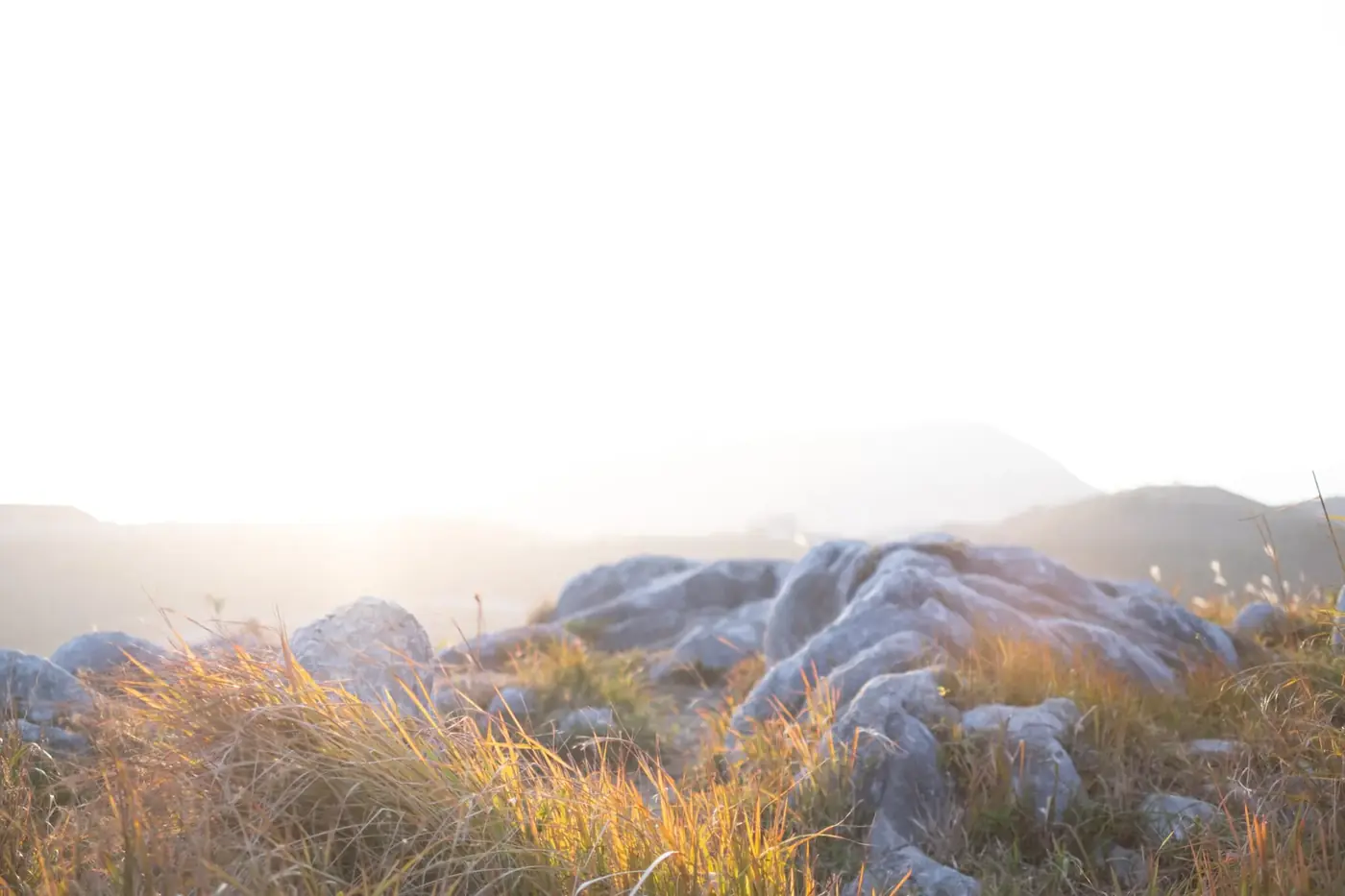
Morning on Hiraodai: limestone and grassland in the first light.
About the house
Yama no Ie Ikimura Hiraodai is a single-storey Japanese house in the small settlement on Hiraodai, a karst plateau about 30 minutes by car from Kokura Station. You rent the whole house and live in it as your own: cook in the kitchen, sit out under the eaves, and walk out onto the grassland.
In July 2017 the house became the first lodging certified under Kitakyushu City's special-zone scheme for private lodging, and the first special-zone lodging in Japan to be located in an urbanisation control area.
Hiraodai karst
The plateau
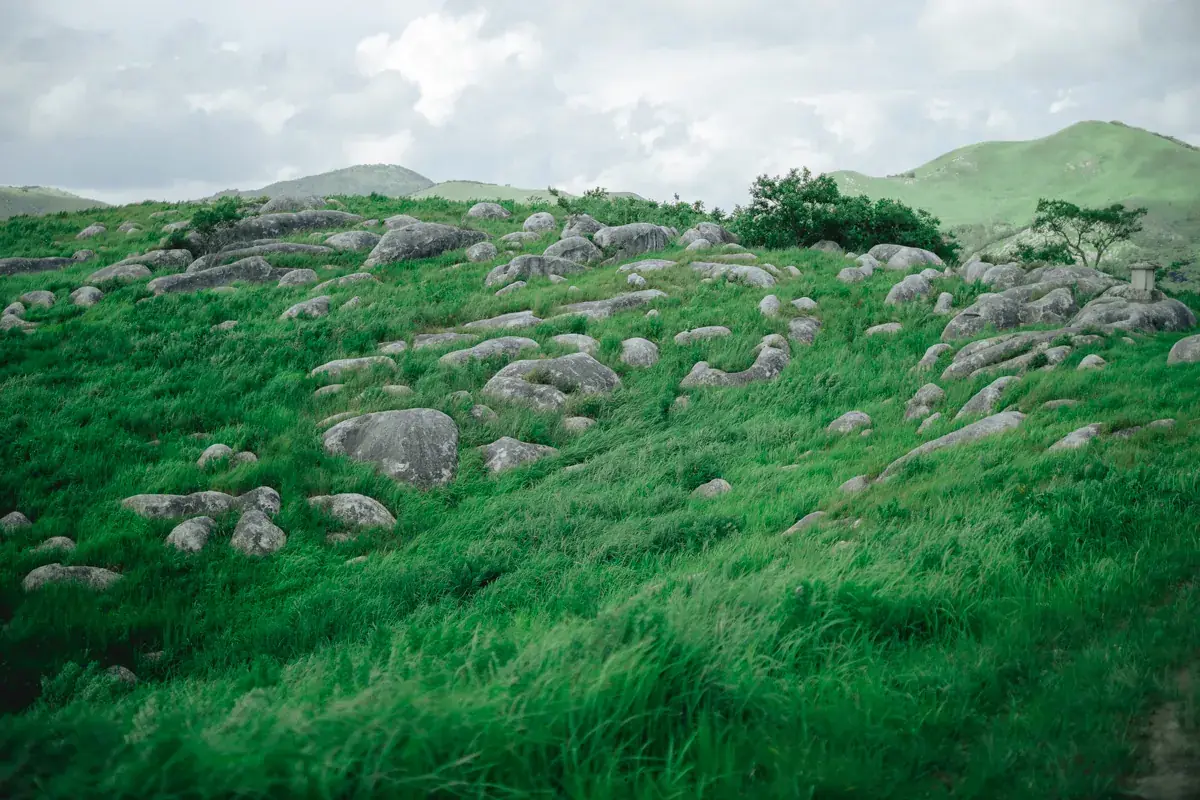
Hiraodai is one of Japan's three great karst plateaus. About 6 km from north to south and 300 to 700 metres above sea level, its grassland is scattered with white limestone that rises from the grass like a grazing flock. The area is called Yōgunbaru, "the plain of the sheep flock".
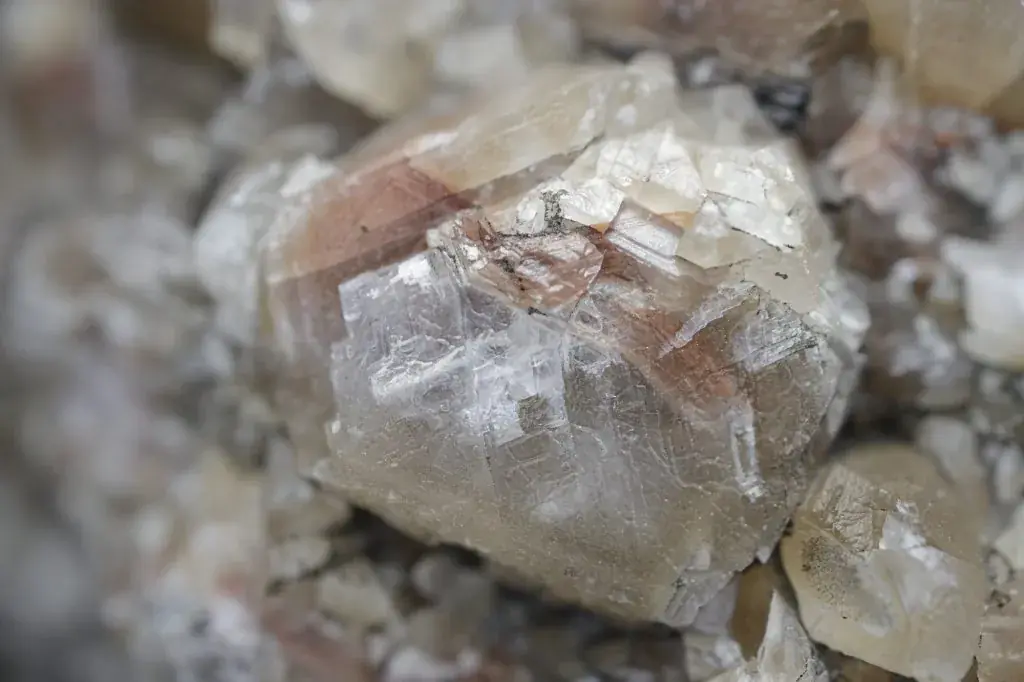
The rock began as a coral reef in a warm sea near the equator about 350 million years ago. It travelled north on the moving plates, and about 100 million years ago heat from magma recrystallised it, which is why the limestone here glitters when you look closely. Rainwater has since dissolved it into sinkholes (dolines) and caves; parts of three caves are open to visitors.
Hiraodai was designated a Natural Monument of Japan in 1952 and became part of Kitakyushu Quasi-National Park in 1972. The word "karst" itself comes from the Kras plateau on the border of Slovenia and Italy.
Yōgunbaru
The limestone "sheep" that give the plateau its best-known view.
Crystalline limestone
Coral-reef rock, recrystallised by heat about 100 million years ago.
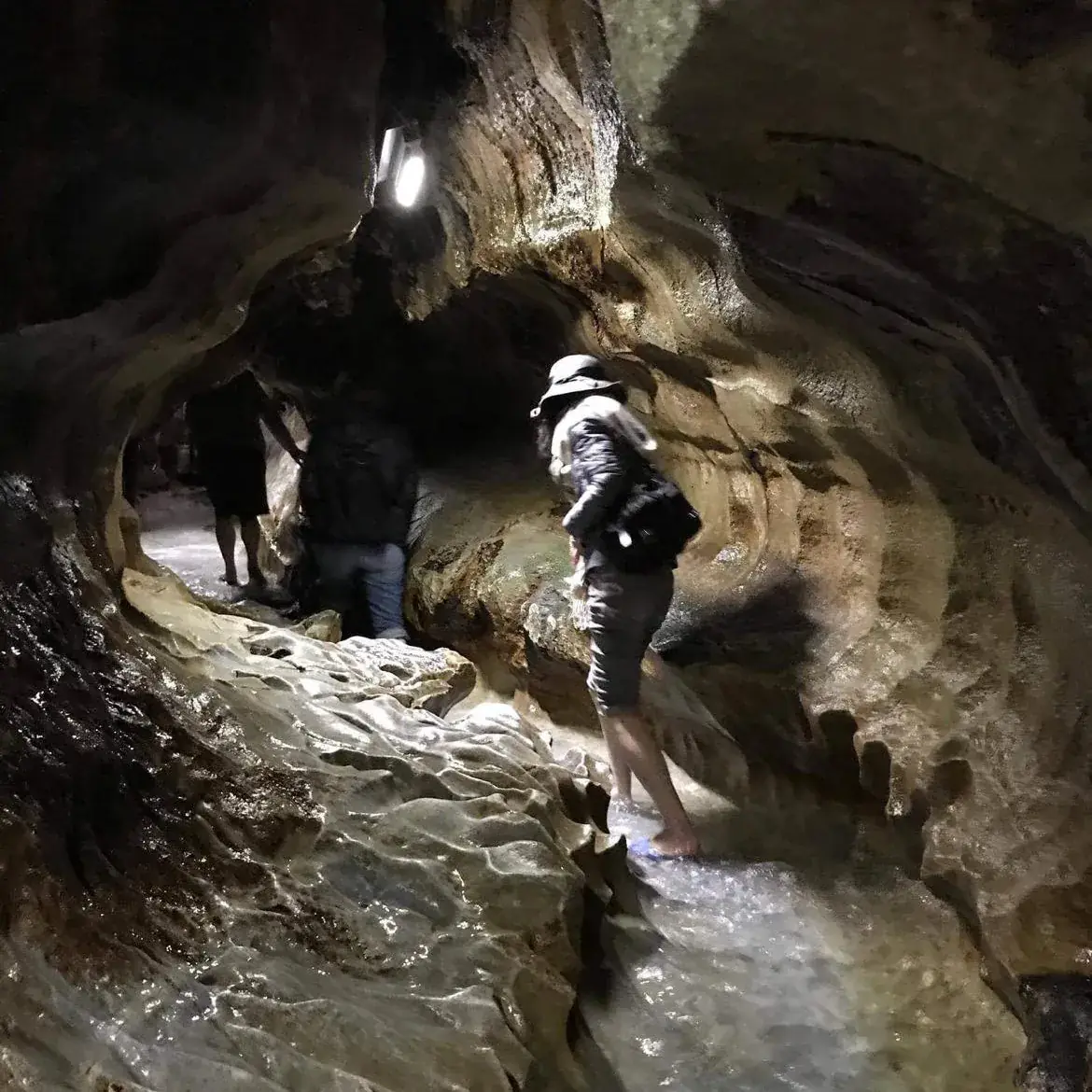
Caves
Parts of the Senbutsu, Ojika and Mejiro caves are open to visitors.
Controlled burning
Kept open by fire
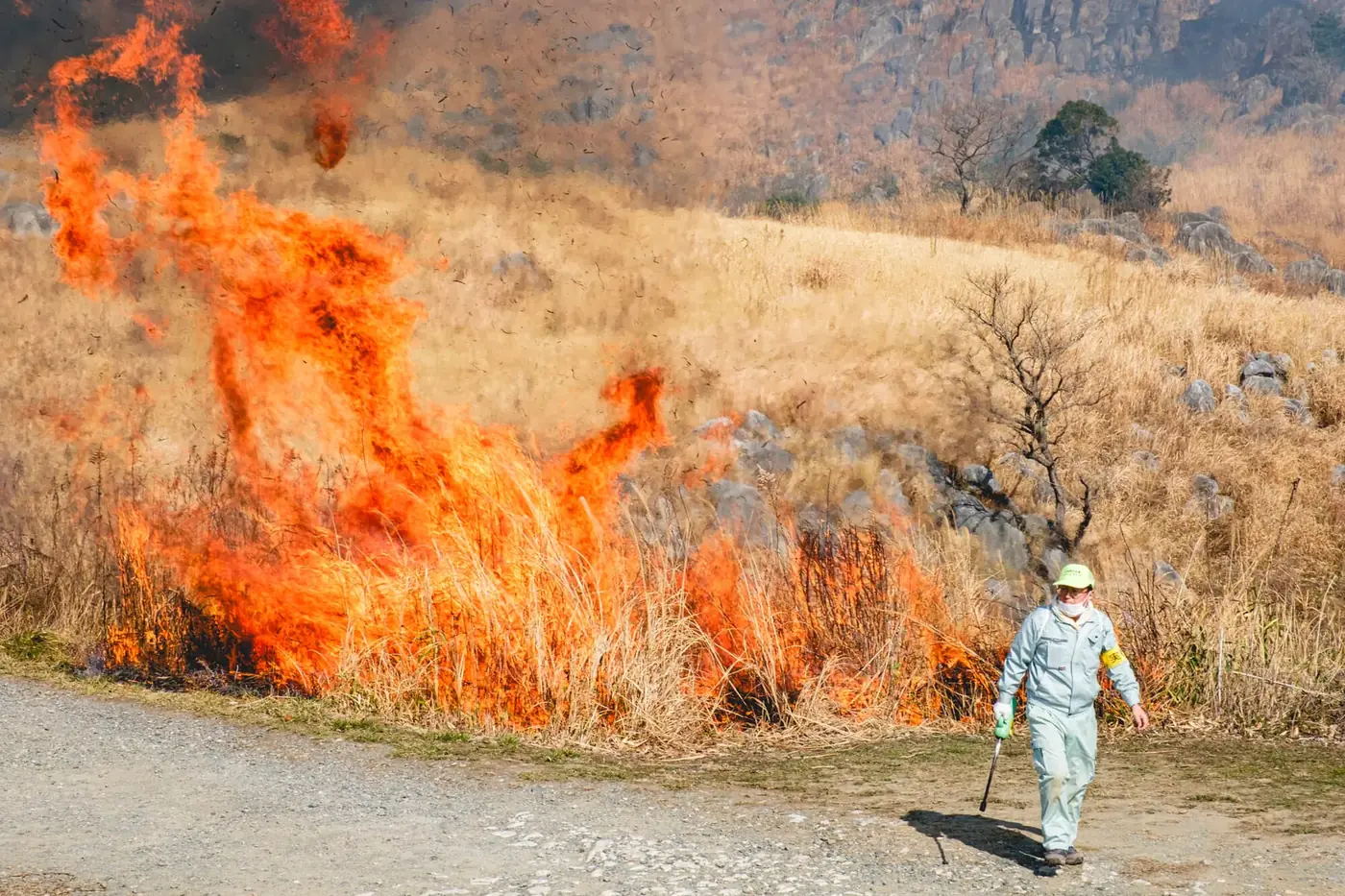
The grassland does not stay open on its own. Since the Edo period the villages below used it as a shared hay meadow, and today, every year between mid-February and early March, local residents and firefighters burn about 330 hectares of dry grass in a single day. As summer approaches, new green shoots come up through the blackened ground.
On the day of the burning, roads and walking paths nearby may be restricted.
Two nights
Two nights on the plateau
Stays start at two nights. Arrive in the afternoon, spend a whole day on the plateau, and leave on the third morning. One way to spend it:
Day one, evening
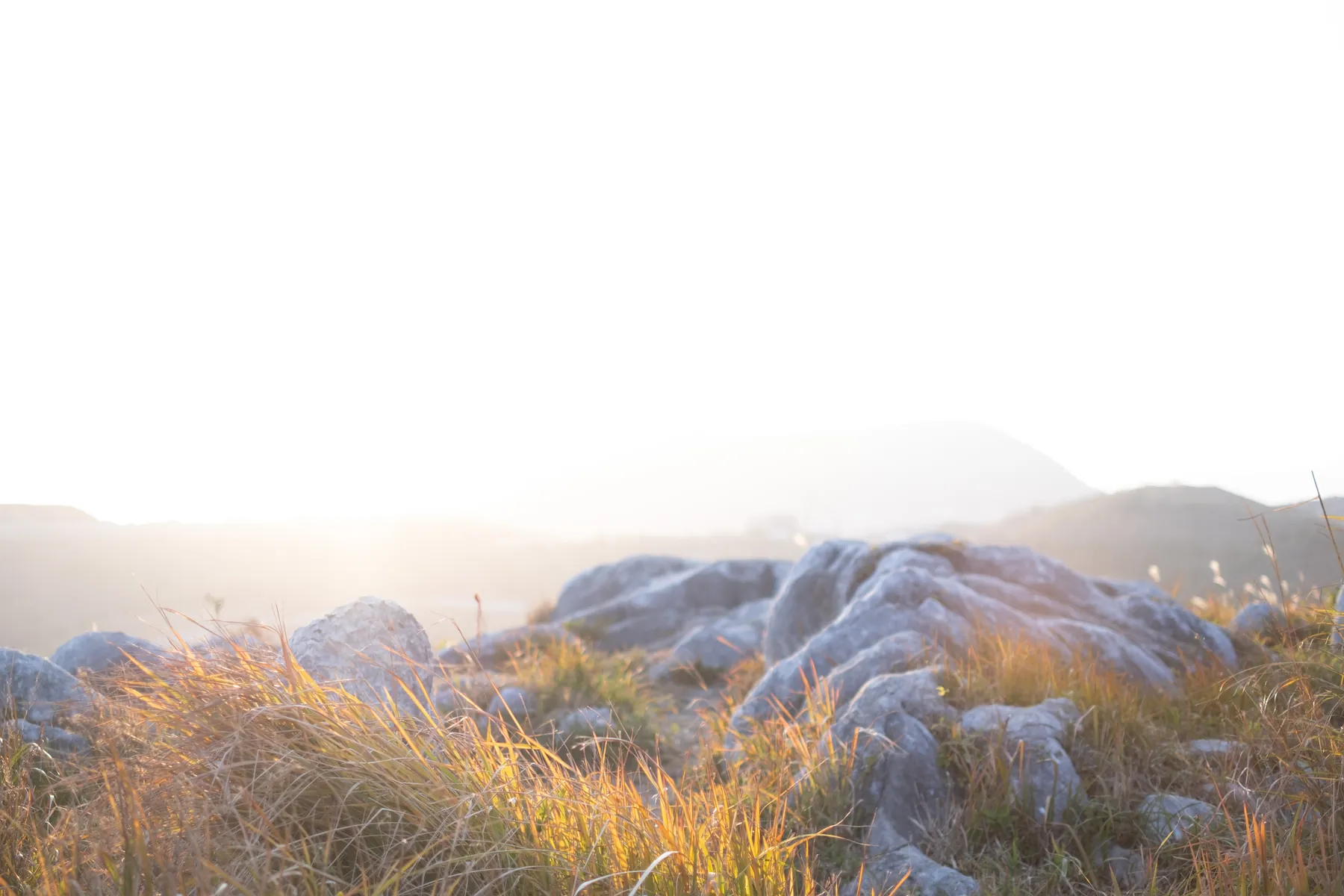
Arrive, then walk out at dusk
Check in between 15:00 and 20:00, leave your bags and head out to Yōgunbaru as the sun goes down behind the limestone. Cook dinner in the kitchen.
Day two
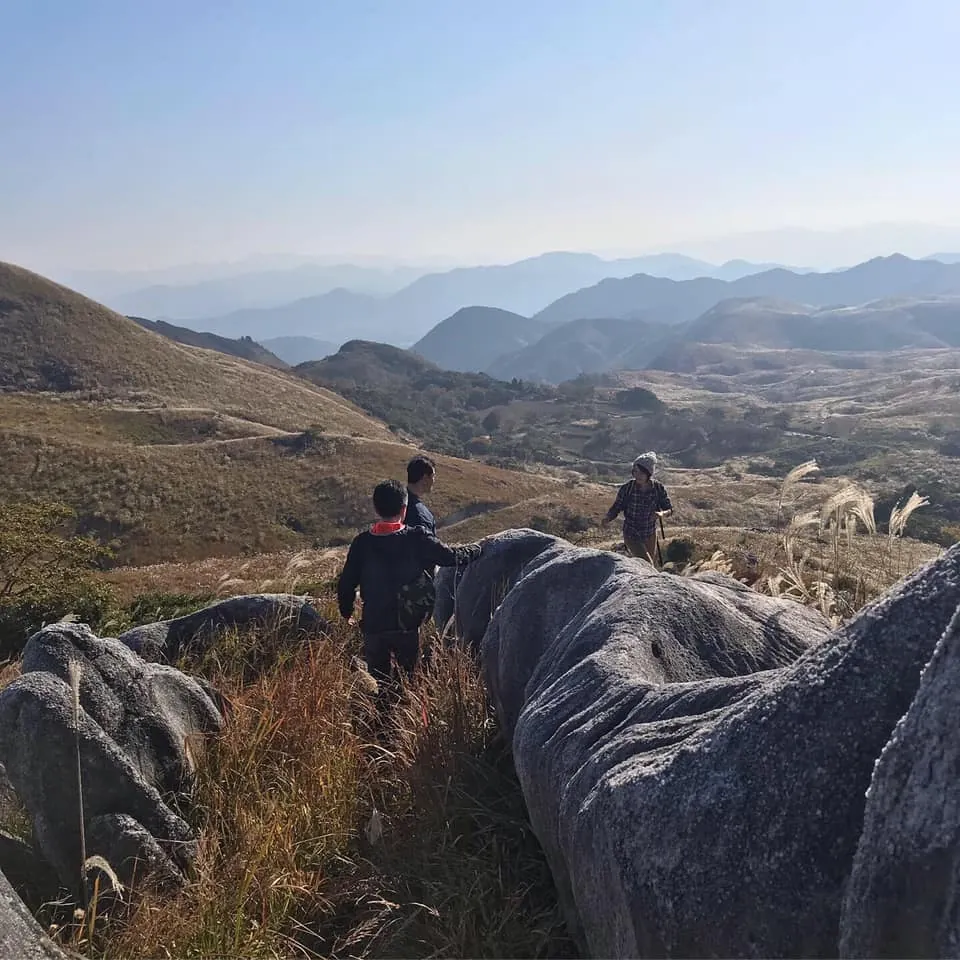
A full day on the karst
Start at the Hiraodai Nature Observation Centre to get to know the plateau, then walk among the sinkholes and limestone. On a wet day, visit one of the caves. At weekends, the café next door serves its own spicy curry.
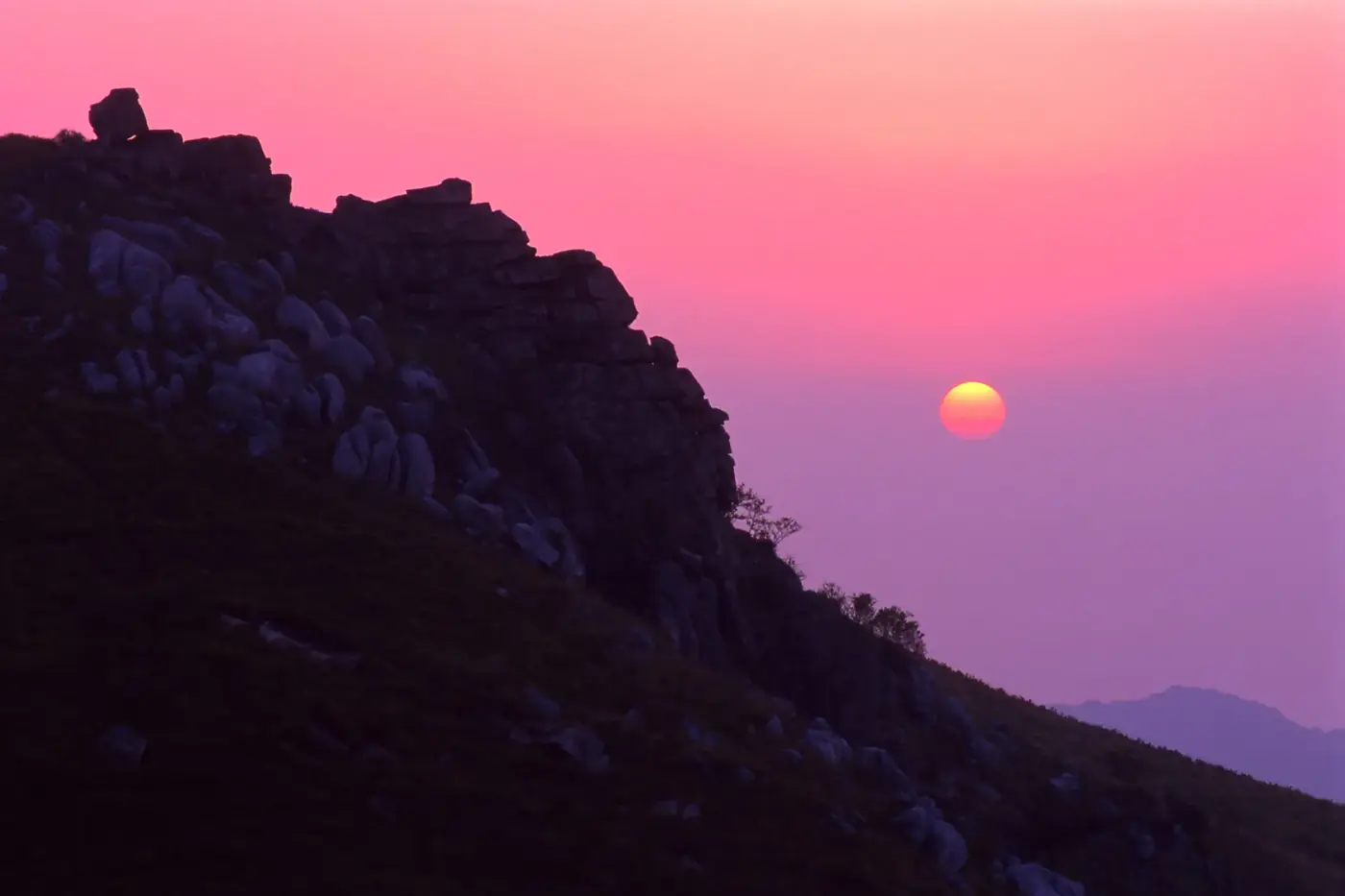
Day three, morning
Morning light, then on your way
Watch the sun come up over the hills. Check out by 10:00; Kokura Station is about 30 minutes away by car.
An example, not a package. Please check cave opening hours and café opening days before you travel.
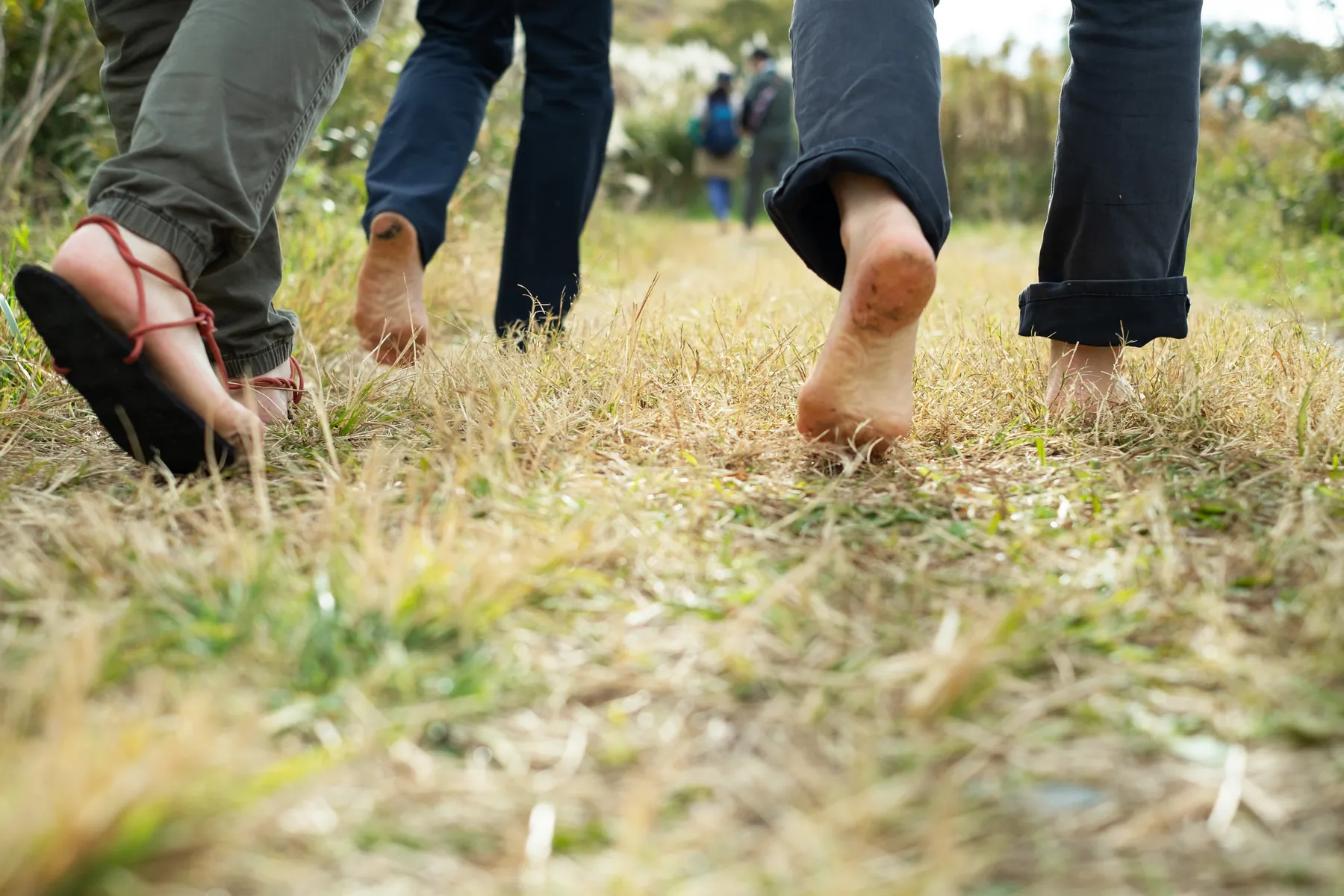
Barefoot
Take your shoes off
Ikimura is becoming a barefoot house. We keep the lawn in the garden tidy and have things on hand that make it easy to go without shoes. Whether you do is entirely up to you.
Stand on grass and soil on a plateau that began as a coral reef. A small way to slow down.
The grassland has sharp stones and cut grass stems. Watch your step if you walk barefoot.
Experiences
Things to do from the house
Watch the sunset and go for a morning walk straight from the house. For guided walks, caves and the café, we can point you to what is on locally. Ask us when you book.
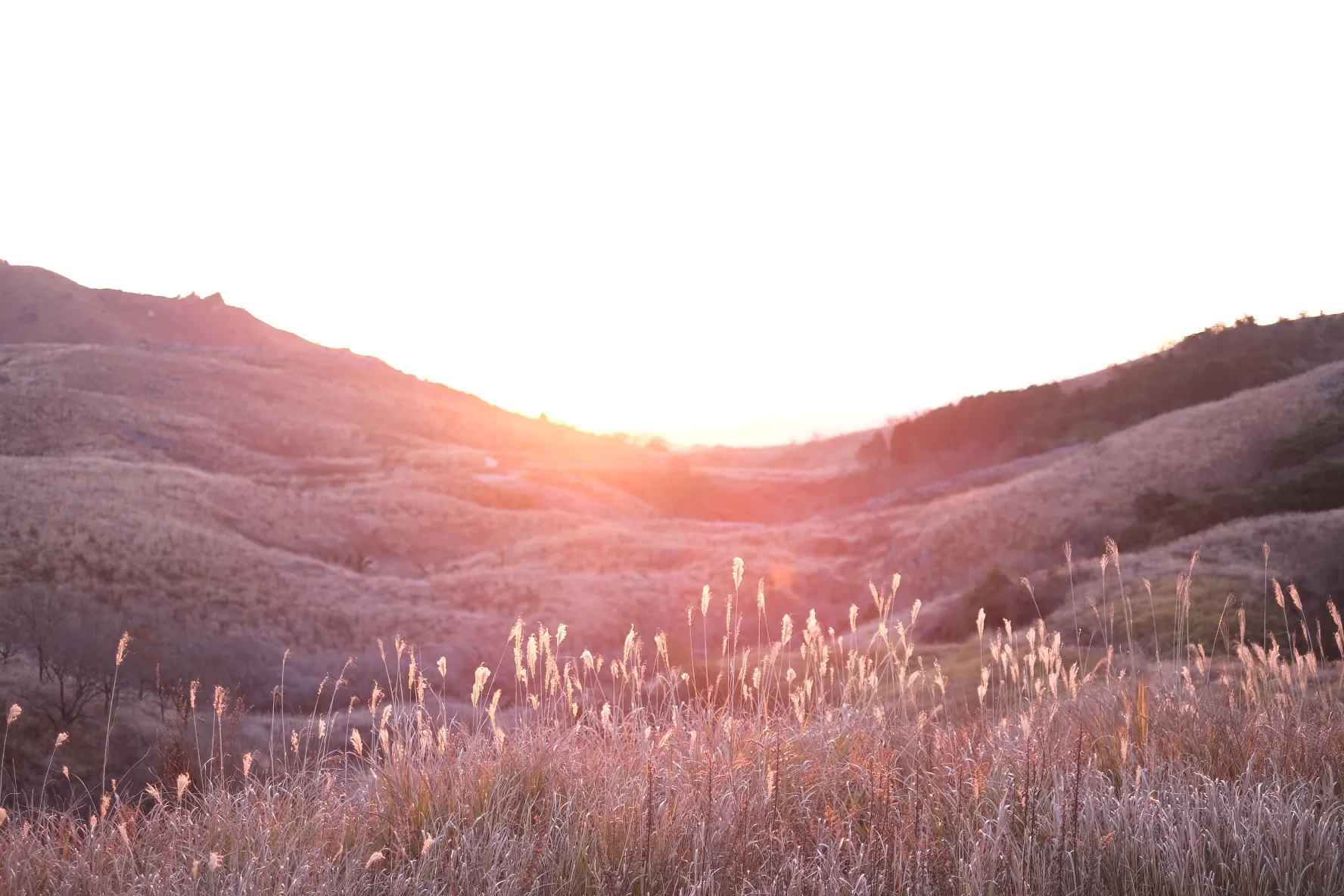
Evening
Sunset and stars
The sun goes down behind the grassland. At night, look up at the sky from the plateau, away from the lights of town.
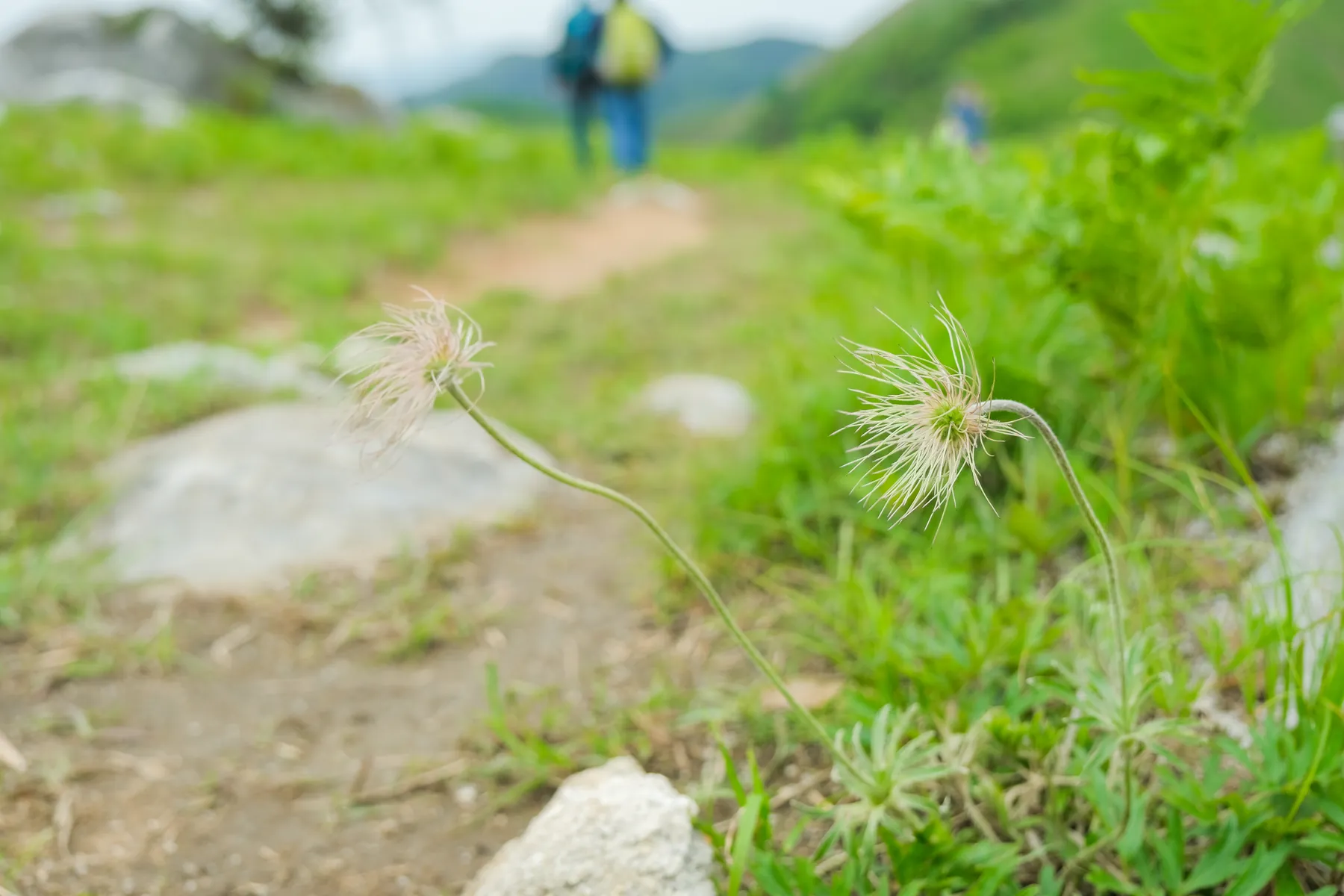
Morning
An early walk
A quiet path across the grassland in the morning light.
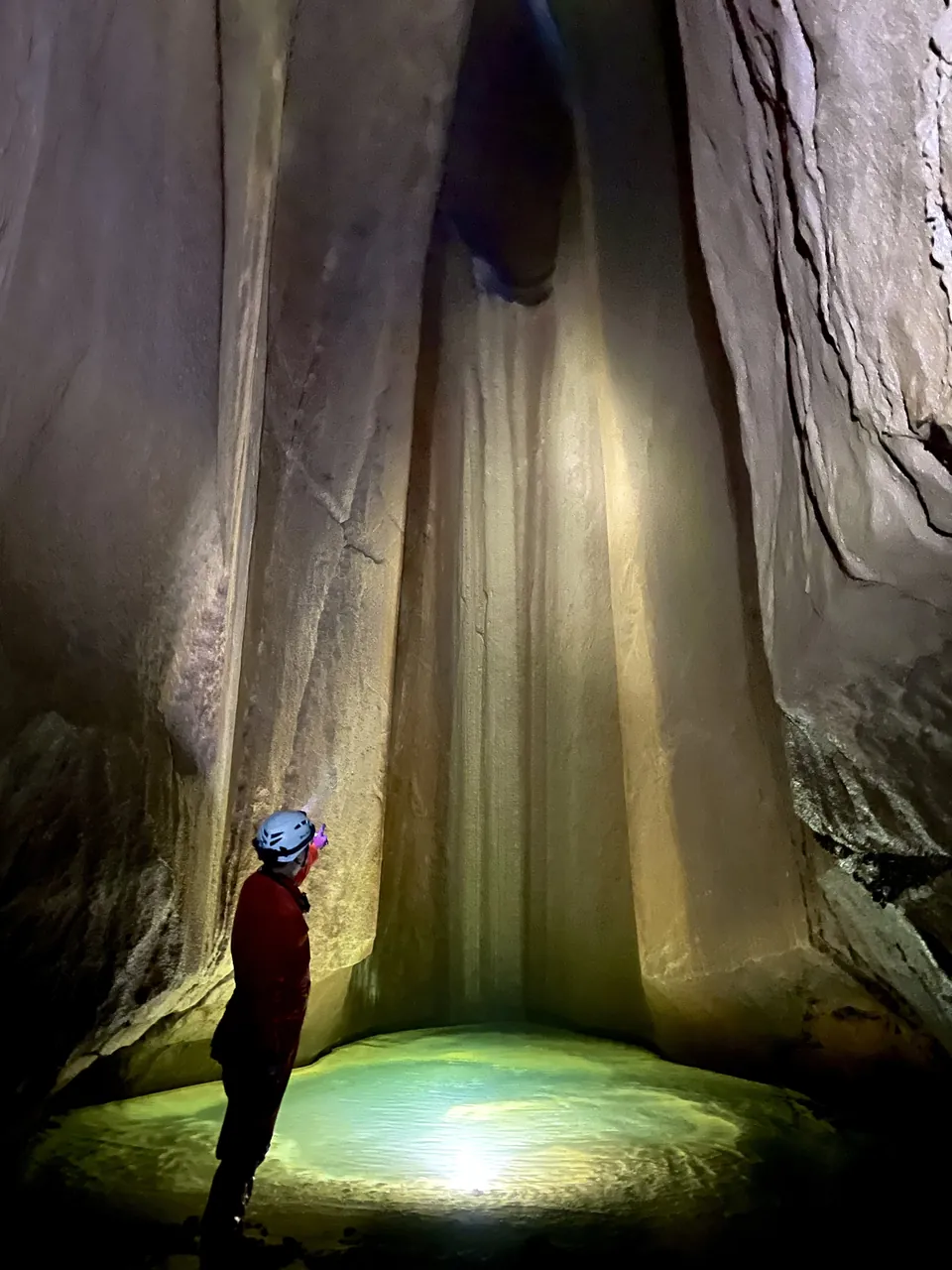
Daytime
Walk with a guide, go underground
Sinkholes, limestone and caves, with a local guide.
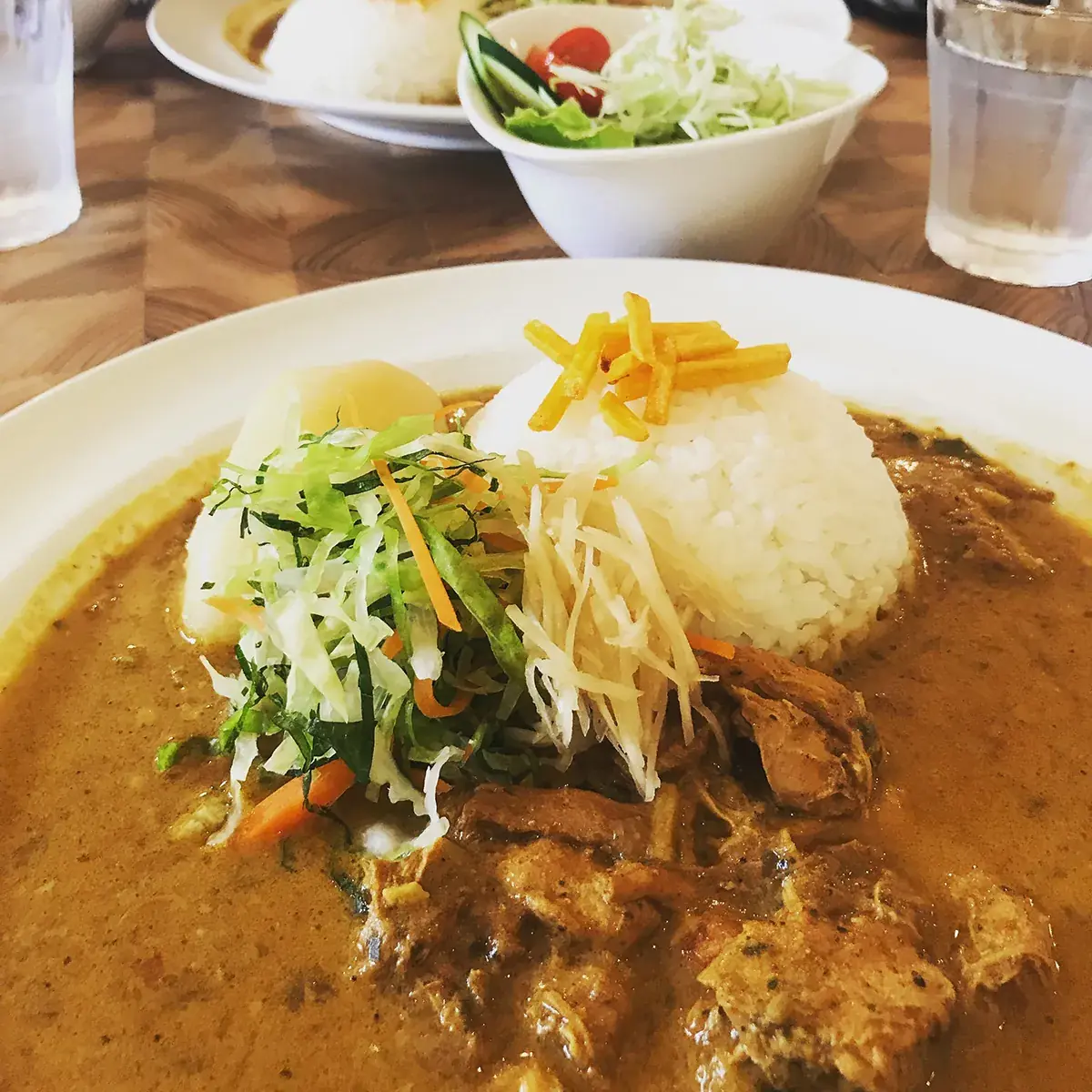
Lunch
Lunch next door
At weekends, the café next door serves its own spicy curry.
Whole-house rental
The house
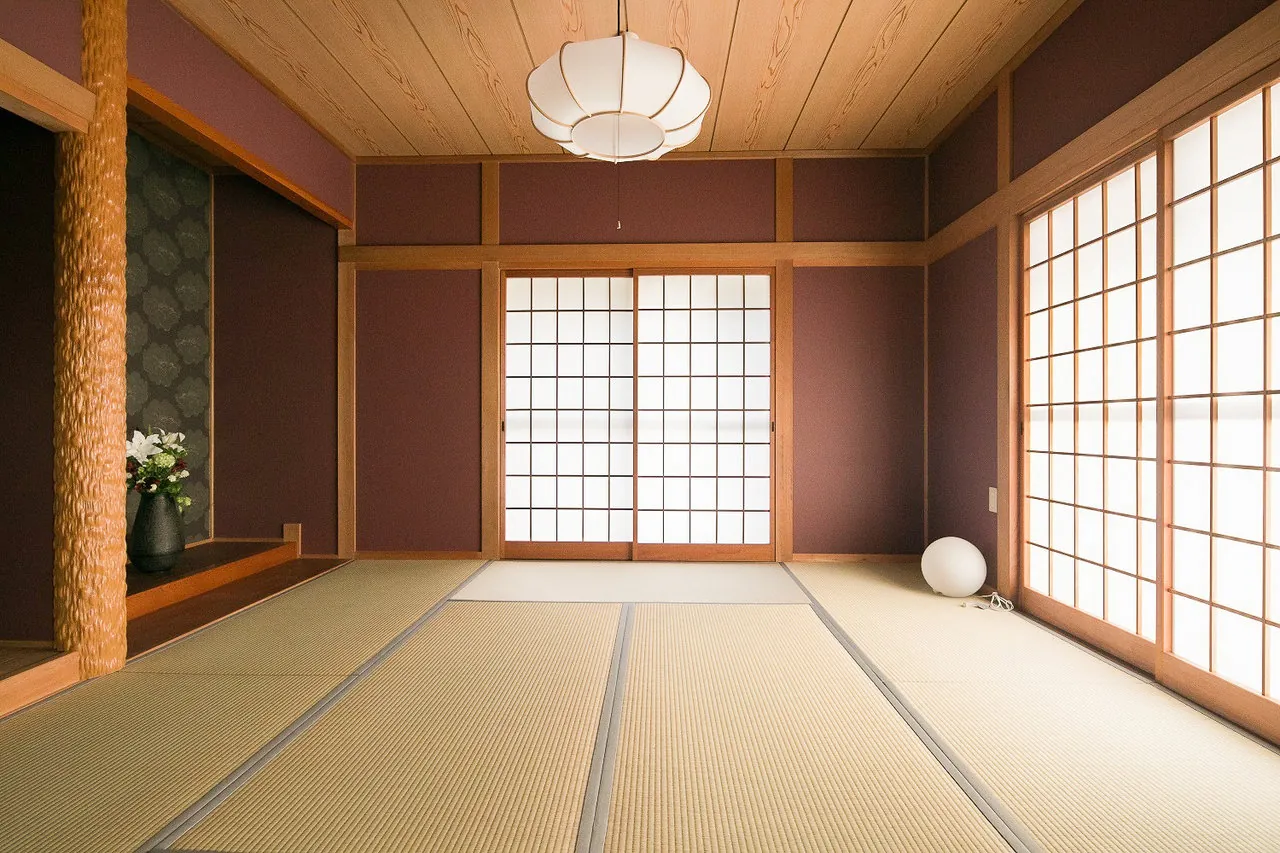
A single-storey house, renovated to keep its Japanese character. There are two tatami rooms and three wooden-floored rooms, each with its own wallpaper and lighting, plus a dining kitchen, bathroom, washroom and toilet. One room has bunk beds; another has a low round table, a chabudai.
- Kitchen
- Fridge-freezer, gas hob, microwave, toaster, rice cooker and coffee maker, with pans, knives, tableware and cutlery.
- Bathroom
- Washing machine, hair dryer, shampoo, conditioner, body soap, towels and bath towels.
- Comfort
- Wi-Fi, TV, air conditioning, fan, oil heater and other heaters, and a kotatsu (heated table). A lawn garden and parking for five cars.
- House rules
- Shoes off indoors. No smoking anywhere. Please keep quiet after 21:00. No pets. Staff are on site only at check-in and check-out.
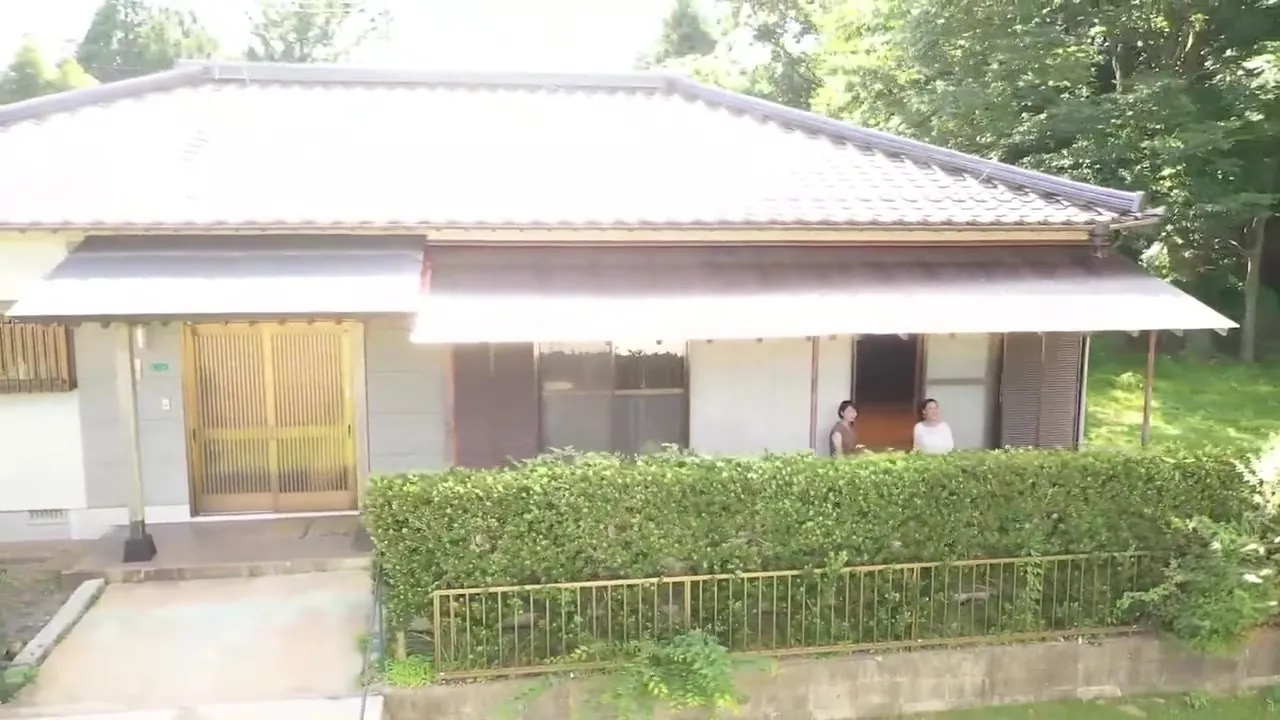
The house
A single-storey home in the settlement on the plateau.
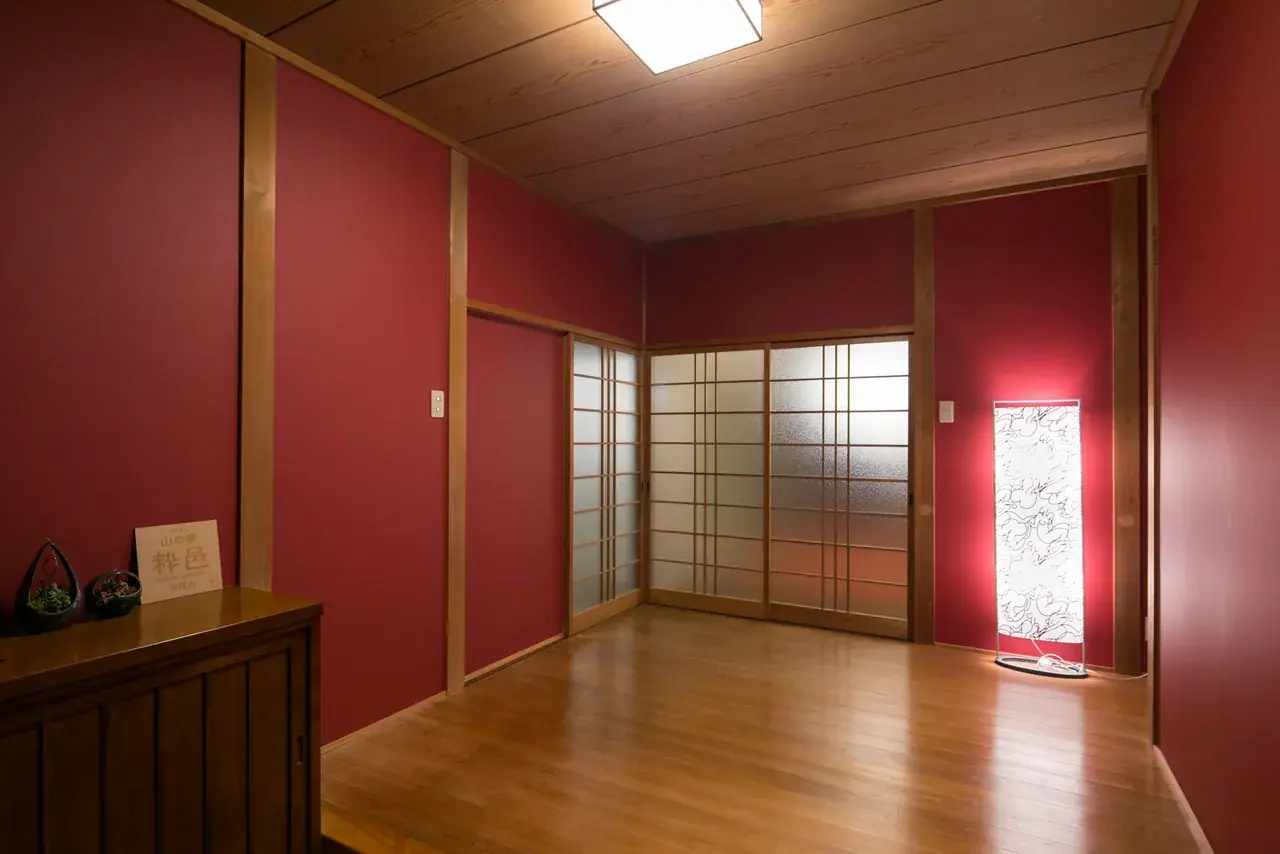
Wooden-floored rooms
Deep red walls and soft light through the shoji.
Tatami rooms
Tatami, shoji and a round paper lamp.
Access
Getting here
About 30 minutes by car from Kokura Station.
- By Shinkansen
- Kokura Station is on the Shinkansen line from Tokyo, Osaka and Hakata (Fukuoka). From Kokura, the house is about 30 minutes by car.
- From the airports
- About 40 minutes by car from Kitakyushu Airport, and about 75 minutes from Fukuoka Airport.
- By local train
- JR Hitahikosan Line from Kokura to Ishiharamachi Station (about 30 minutes), then a taxi. Public transport to the plateau is limited, so a hire car is recommended.
- Driving in Japan
- Visitors need an International Driving Permit or an official Japanese translation of their licence, depending on the country that issued it. Please check before you travel.
Address: 2-1-20 Hiraodai, Kokuraminami-ku, Kitakyushu, Fukuoka, Japan. Parking for five cars on site.
The city nearby
Kokura, 30 minutes away
Wild karst, and a castle town half an hour away.
Kokura, where the Shinkansen stops, is about 30 minutes from the house by car. Spend a morning in town before you drive up to the plateau, or an afternoon there on your way out.
- Kokura Castle
- Built from 1602 by the lord Hosokawa Tadaoki. The main keep burned down in 1837 and was rebuilt in 1959. About 15 minutes' walk from Kokura Station.
- Kokura Castle Japanese Garden
- Next to the castle: a feudal lord's residence and garden, recreated, where you can sit in the study hall and have a bowl of matcha.
- Sushi
- Kitakyushu faces three different seas, the Hibikinada, the Kanmon Straits and the Suonada, and the city promotes its sushi made with local fish.
FAQ
Good to know
Why is the minimum stay two nights?
The house is licensed under Kitakyushu City's special-zone scheme for private lodging, which takes bookings of two nights or more.
Do we have the whole house?
Yes. The house is let to one group at a time, from one to 15 guests.
Are meals included?
No. The kitchen is fully equipped for self-catering. Hitsuji Café Hiraodai, next door, opens mainly at weekends; check its Instagram for opening days.
What are the check-in and check-out times?
Check-in is between 15:00 and 20:00; check-out is between 07:00 and 10:00.
Is there a local tax?
Kitakyushu City charges an accommodation tax of ¥200 per person per night (¥150 city tax and ¥50 prefectural tax).
Do I need my passport?
Yes. Visitors to Japan are required to carry their passport. At check-in, guests who do not live in Japan show their passport so that we can complete the guest register, as required by law.
How do I pay, and what if I cancel?
Send a booking request from Dates & prices. We check availability and email you a payment link; your booking is confirmed once you pay by card. Cancellation fees are listed under booking terms.
Plan your two nights on Hiraodai
The whole house, up to 15 guests, from two nights.